Which part(s) of the course was MOST valuable to you. Please explain why.
Reunification module.
Most school incidents break down because schools and responders train separately. SSAVEIM™ Train-the-Trainer is a two‑day course that certifies your own local trainers to deliver a unified violent event incident and reunification playbook for school staff, law enforcement, fire/EMS, and emergency management.
The goal is simple. Decrease the time to neutralize the threat, get injured to a hospital, and reunite students with their families. SSAVEIM brings school leaders, law enforcement, fire/EMS, and emergency management into the same room, on the same plan.
Train school staff, law enforcement, fire/EMS, and emergency management together on a single, integrated school incident playbook, including reunification.
Your trainers keep the curriculum, checklists, and LMS access so you can teach SSAVEIM on your schedule, as often as you need.
Shared training, clear roles, and course certificates help schools and responders show they’ve trained together on the same plan.
A 16-hour course for up to 30 trainer candidates: ideally 10 law enforcement, 10 fire/EMS, and 10 school staff. The lecture now lives in SSAVEIM Foundations, our free self-paced course, so day one is the class itself, scenarios included, with your trainers working it as students. Day two is where they teach that class and run those scenarios themselves, and they leave ready to repeat the training locally.
Your trainers work through SSAVEIM the way their own people will, running the scenarios as students.
Your trainers teach the class and run its scenarios within their own group, so they leave ready to deliver it locally.
This course provides you with the experience and confidence to respond to a violent event, regardless of your daily responsibilities. Participants are trained to secure the students, identify the threat, provide medical intervention, and reunify students with their loved ones.
The course walks the whole room through a violent attack from start to finish. Lockdown, then the public safety response, then reunification. Every block includes an exercise.
After a violent attack, the school is a crime scene, so reunification has to happen somewhere else. Moving students to an offsite location, securing it, and getting families to the right place. This course does it hands on, with responders in the room.
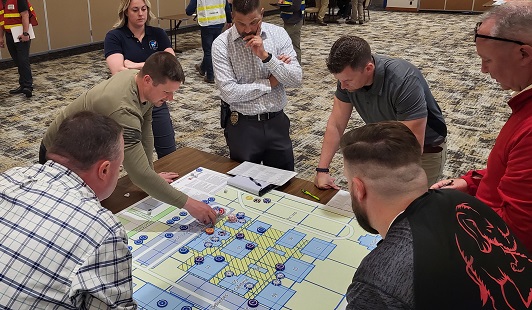
School personnel work alongside law enforcement, fire/EMS, dispatch, PIO, and emergency management, rotating through roles so your team meets and trains together before a crisis, not during one.
Instructors utilize a no-fault, no-embarrassment coaching style, providing hands-on experience for entry level and executives alike.
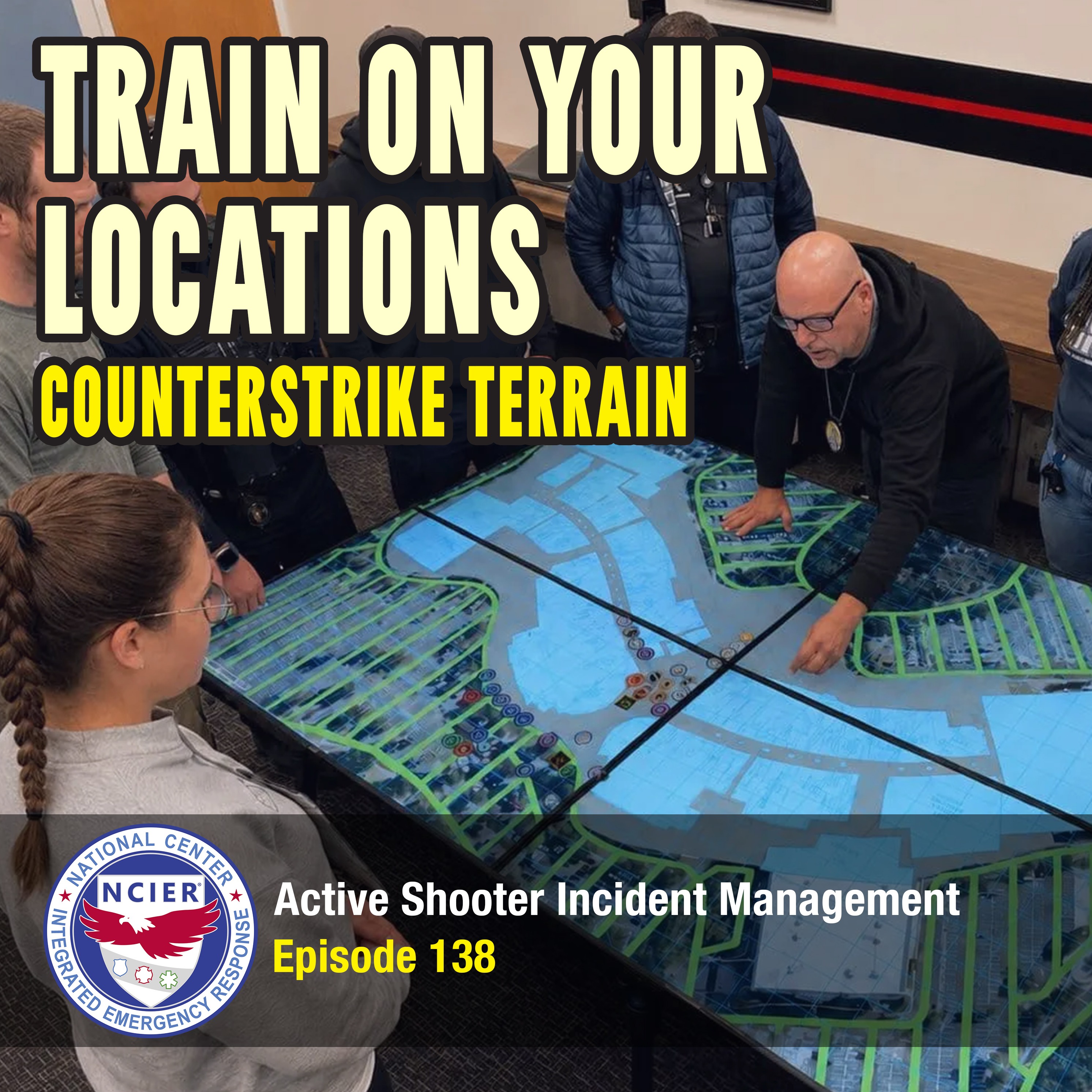
NCIER brings Counterstrike Terrain to your Train-the-Trainer delivery. Counterstrike Terrain is a C3 Pathways product, purchased separately if you want one of your own for local training, and it is eligible for grant funding.
SSAVEIM exercises run on a digital map table built from the real aerial imagery and floor plans of the buildings you actually cover. The site everyone worries about is the site you train on.
Your trainers keep the curriculum, the checklists, and their certification, so they can deliver SSAVEIM locally on your schedule with no per-delivery fee from NCIER.
Bring school leaders, law enforcement, fire/EMS, and emergency management into the same room, on the same plan.
Hosts provide the venue, AV support, and participants. NCIER provides the SSAVEIM curriculum, Counterstrike Terrain™ for in-course exercises, and instructor team.
Trainer candidates complete SSAVEIM Foundations, our free self-paced course, beforehand. Registration tracks completion and sends reminders, so you know who is ready.
Here’s what happens over the next 1 business day.
Keep an eye out for a call from (407) 490-1300. If you don’t hear from us within 1 business day, call us at (407) 490-1300.
Prefer to talk now? Call (407) 490-1300.
SSAVEIM Foundations is a free, self-paced course that gives everyone the same clear understanding of an active shooter attack at a school. SSAVEIM Train-the-Trainer builds one joint team and one shared incident playbook, so everyone knows exactly what to do.
15 to 20 minutes, no obligation. We’ll help you figure out if hosting SSAVEIM Train-the-Trainer makes sense for your schools.
Get SSAVEIM Trainer InfoWhich part(s) of the course was MOST valuable to you. Please explain why.
Reunification module.
Which part(s) of the course was LEAST valuable to you? Please explain why.
Law enforcement response.
Please provide any other comments or suggestions you have for improving this course.
More hands on activities.
What other training is most important to you now that you have completed this course?
Student did not leave a written comment.
Which part(s) of the course was MOST valuable to you. Please explain why.
Student did not leave a written comment.
Which part(s) of the course was LEAST valuable to you? Please explain why.
Student did not leave a written comment.
Please provide any other comments or suggestions you have for improving this course.
Student did not leave a written comment.
What other training is most important to you now that you have completed this course?
Student did not leave a written comment.
Which part(s) of the course was MOST valuable to you. Please explain why.
Practicles.
Which part(s) of the course was LEAST valuable to you? Please explain why.
None.
Please provide any other comments or suggestions you have for improving this course.
Everyone in schools should have this course.
What other training is most important to you now that you have completed this course?
More reunification topics.
Which part(s) of the course was MOST valuable to you. Please explain why.
The scenario.
Which part(s) of the course was LEAST valuable to you? Please explain why.
None. Could be longer.
Please provide any other comments or suggestions you have for improving this course.
None. Thank you.
What other training is most important to you now that you have completed this course?
Will investigate.
Which part(s) of the course was MOST valuable to you. Please explain why.
In depth knowledge of instructors.
Which part(s) of the course was LEAST valuable to you? Please explain why.
Student did not leave a written comment.
Please provide any other comments or suggestions you have for improving this course.
Student did not leave a written comment.
What other training is most important to you now that you have completed this course?
Student did not leave a written comment.
Which part(s) of the course was MOST valuable to you. Please explain why.
Showing how easy a table top exercise can educate/involve multiple facets of any type of school or otherwise critical incident (not just an active shooter (tornado/fire/threat/chemical exposure. etc>0.
Which part(s) of the course was LEAST valuable to you? Please explain why.
I believe a little too much time spent on the reunification process. This is the one component that can carefully be designed and made "portable"; whereby for the reunification location just has to be selected (and can be pre-selected with optional locations dependent on the incident).
Please provide any other comments or suggestions you have for improving this course.
Design a program specifically for higher educational facilities as there are distinctive differences (a lot of the K-12 items do not play into higher education (reunification would be on a much small scale and more (after the fact/psychological based).
What other training is most important to you now that you have completed this course?
I am tasked with designing a response plan for an unarmed college-level security force as well as instructing students and faculty (colllege professors/adjuncts) that do not have the monthly drills that K-12 teachers go through each year that keep their particular skills sharp. Thanks for a good program that was very engaging.
Which part(s) of the course was MOST valuable to you. Please explain why.
The exercise scenarios were extremely valuable. They helped me get a view of what would occur during an incident, and the appropriate actions to take. It also helped me understand how all disciplines would work together by following the ASIM Checklist.
Which part(s) of the course was LEAST valuable to you? Please explain why.
I found all information in this training valuable.
Please provide any other comments or suggestions you have for improving this course.
Split up large groups for the activity portion.
What other training is most important to you now that you have completed this course?
This training aligns with ASIM Training and ICS and has increased my knowledge of incident management.
Which part(s) of the course was MOST valuable to you. Please explain why.
Participation.
Which part(s) of the course was LEAST valuable to you? Please explain why.
N/A.
Please provide any other comments or suggestions you have for improving this course.
Wherrre can we gett the materials used in the training fornour district.
What other training is most important to you now that you have completed this course?
Student did not leave a written comment.
Which part(s) of the course was MOST valuable to you. Please explain why.
Reunification. It is the least discussed topic.
Which part(s) of the course was LEAST valuable to you? Please explain why.
ASIM review. I have already taken ASIM basic.
Please provide any other comments or suggestions you have for improving this course.
We’ll ran course.
What other training is most important to you now that you have completed this course?
None at this time.
Which part(s) of the course was MOST valuable to you. Please explain why.
Student did not leave a written comment.
Which part(s) of the course was LEAST valuable to you? Please explain why.
Student did not leave a written comment.
Please provide any other comments or suggestions you have for improving this course.
Student did not leave a written comment.
What other training is most important to you now that you have completed this course?
Student did not leave a written comment.
*Evaluations are collected from verified course participants and published without editing. Ratings and comments reflect each participant’s individual experience.