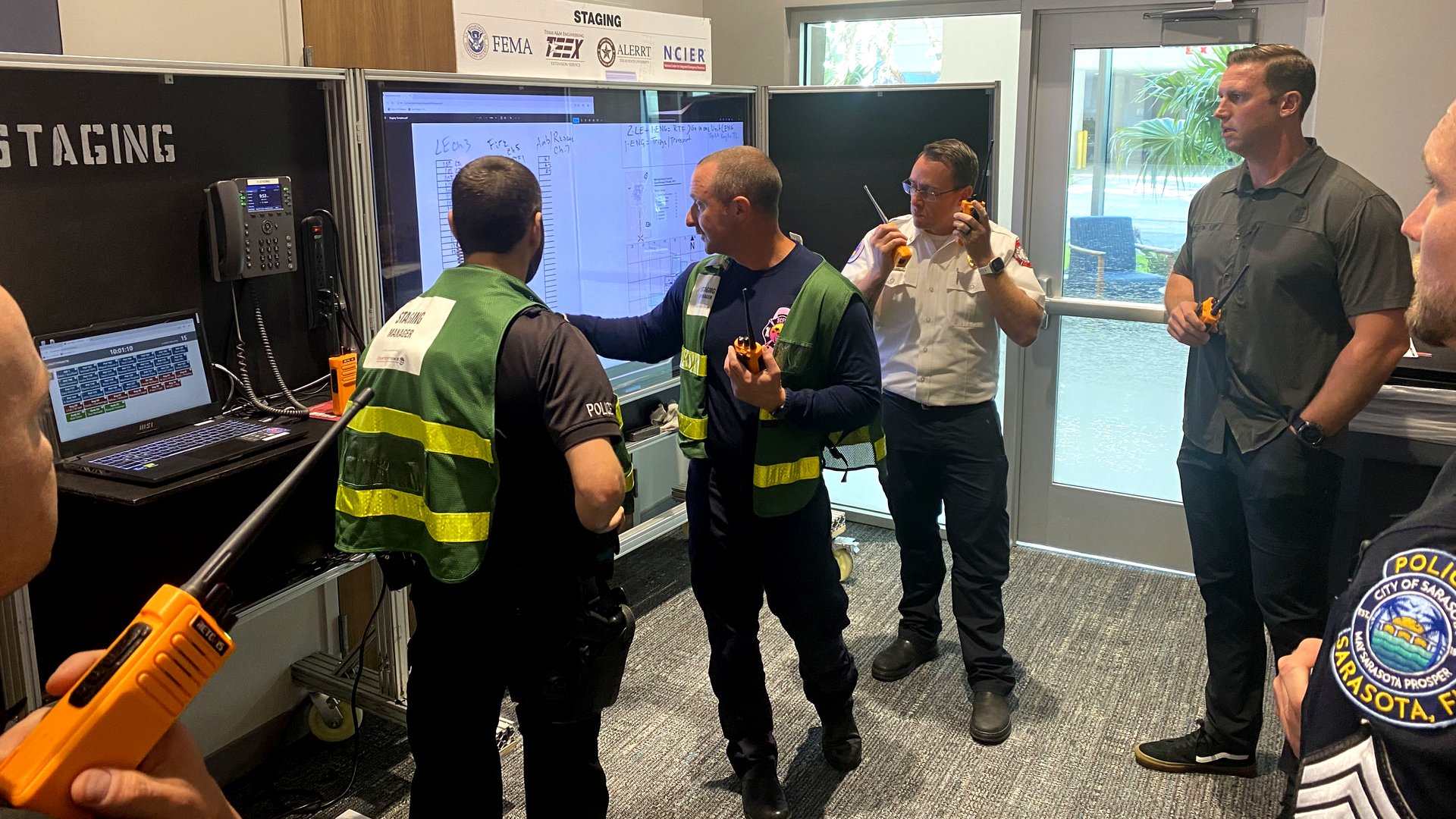
The ASIM model utilizes two Staging Managers, one for law enforcement and one for Fire/EMS. In locales where EMS operates separately from the fire service (e.g., third service, private, hospital-based, etc.), an additional Staging Manager for EMS is encouraged. The Staging Managers monitor their discipline’s radio channel and work together to document arriving resources, organize those resources into needed teams, assign those teams to task requests received (usually by radio) from other ICS positions (e.g., Tactical, Triage, Transport, etc.), and deploy them as requested. The Staging Managers keep the Incident Commander informed of resource pool availability and make requests for additional resources. The Incident Commander may delegate authority to the Staging Managers to maintain a resource pool par level and request additional resources directly from the dispatch/communications entity as needed.

NCIER®
Glossary
October 15, 2026 • 1 min read
Staging Manager
Definition
In an active shooter event, the person responsible for documenting arriving resources, organizing those resources into needed teams, and assigning those teams to tasks received from other elements of the Incident Command System.
Official Definition
Source: Active Shooter Incident Management: Instructor Guide, C3 Pathways, Inc., 2026.
Discussion
Author
Lead Instructor
Reviewed By
Lead Instructor
Last updated:
Frequently Asked Questions
A Staging Manager fulfills task requests received from other ICS positions by organizing resources into teams and assigning those teams to a requested task. The Staging Manager briefs the team on their assigned task and purpose by providing the ABCDE’s. Finally, the Staging Manager is responsible for documentation of incoming resources and their assignment when deployed.
Assignment, Boss, Channel, Destination, and Equipment. Assignment: the team’s task and purpose. Boss: the ICS position to which the team reports. Channel: the team’s assigned radio channel. Destination: the location where the team is going. Equipment: any specific equipment the team should take.
Typically two, one from law enforcement and one from fire/EMS.
Staging assigns resources to a task and purpose. It provides accountability before units deploy. It also ensures appropriate ingress and egress routes at the incident site.
The Staging Managers keep the Incident Commander informed of resource pool availability and make requests for additional resources. The Incident Commander may delegate authority to the Staging Managers to maintain a resource pool par level and request additional resources directly from the dispatch/communications entity as needed.
Once Staging is established, check in at staging and wait for an assignment.
Top
Find the Perfect Training Class For You