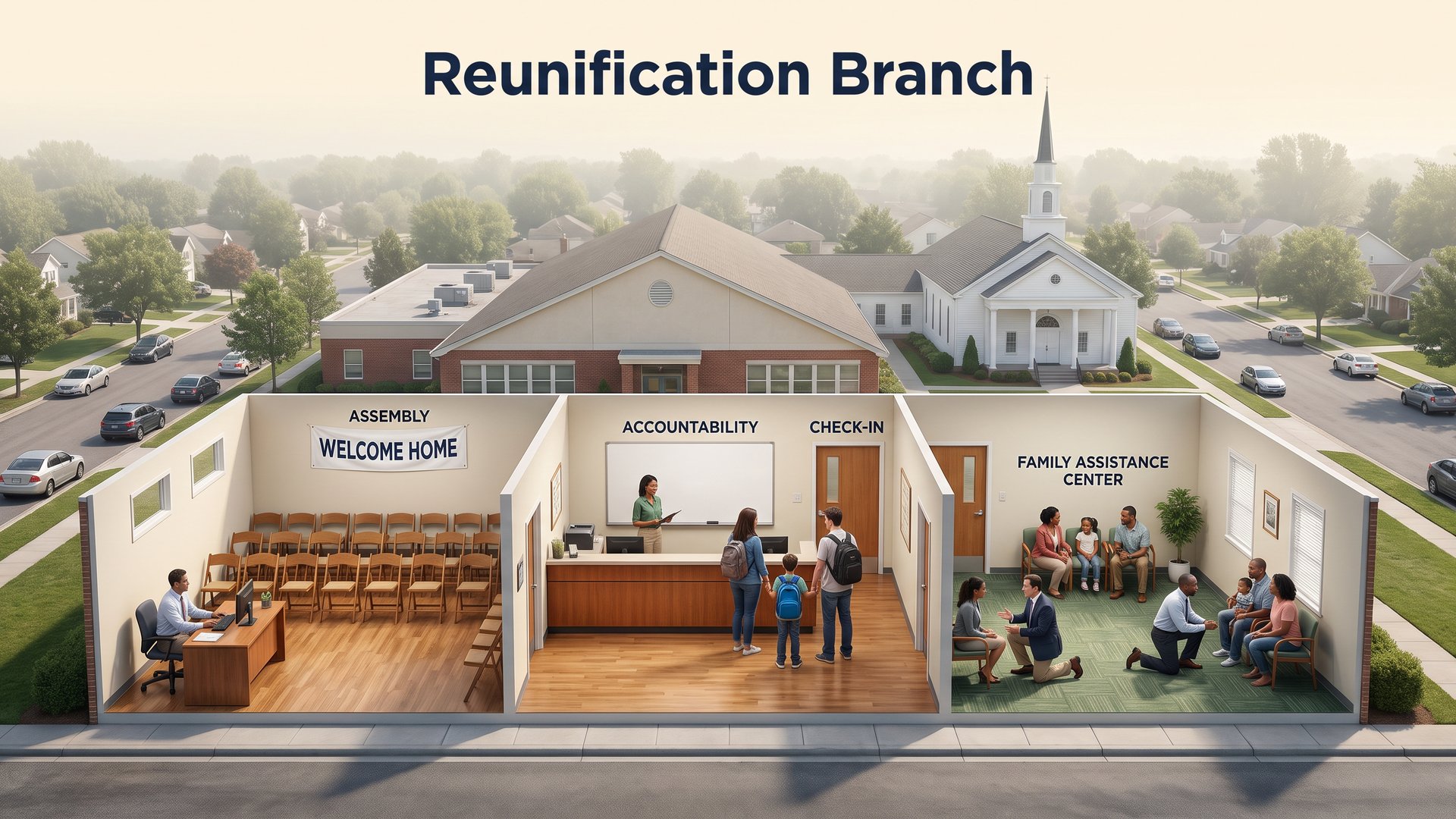
In an active shooter incident, the Reunification Branch reports to the Intelligence/Investigations Section. The Reunification Branch Director leads the Branch. The Assembly, Accountability, and Services Group Supervisors report to Reunification Branch Director. The Reunification Branch reunites survivors and casualties with their families. The Services Group includes the Family Assistance Center that is responsible for reuniting families with casualties. The Family Assistance Center collects casualty information and connects families with the location (hospital) for injured and to the Authority Having Jurisdiction (AHJ) in the case of fatalities.

NCIER®
Glossary
October 15, 2026 • 1 min read
Reunification Branch
Definition
In an active shooter incident, the organizational unit responsible for reuniting survivors and casualties with their families. Reports to the Intelligence/Investigations Section Chief.
Official Definition
Source: Active Shooter Incident Management: Instructor Guide, C3 Pathways, Inc., 2026.
Discussion
Author
Lead Instructor
Reviewed By
Lead Instructor
Last updated:
Frequently Asked Questions
It reunites survivors and casualties with their families.
Under the Intelligence/Investigations Section.
The survivors being reunited are potential witnesses. The Intelligence Section may need information or interviews from survivors. The reporting hierarchy ensures continuity and deconfliction of the investigative process with reunification.
A Director, plus the Assembly Group Supervisor, the Accountability Group Supervisor, and the Services Group Supervisor. Each of the Group Supervisors has Units under their Group.
It reunites families with casualties. The Family Assistance Center is part of the Services Group. It collects casualty information. It directs families of injured victims to the treating hospital. It connects families of the deceased with the Authority Having Jurisdiction (AHJ).
Top
Find the Perfect Training Class For You