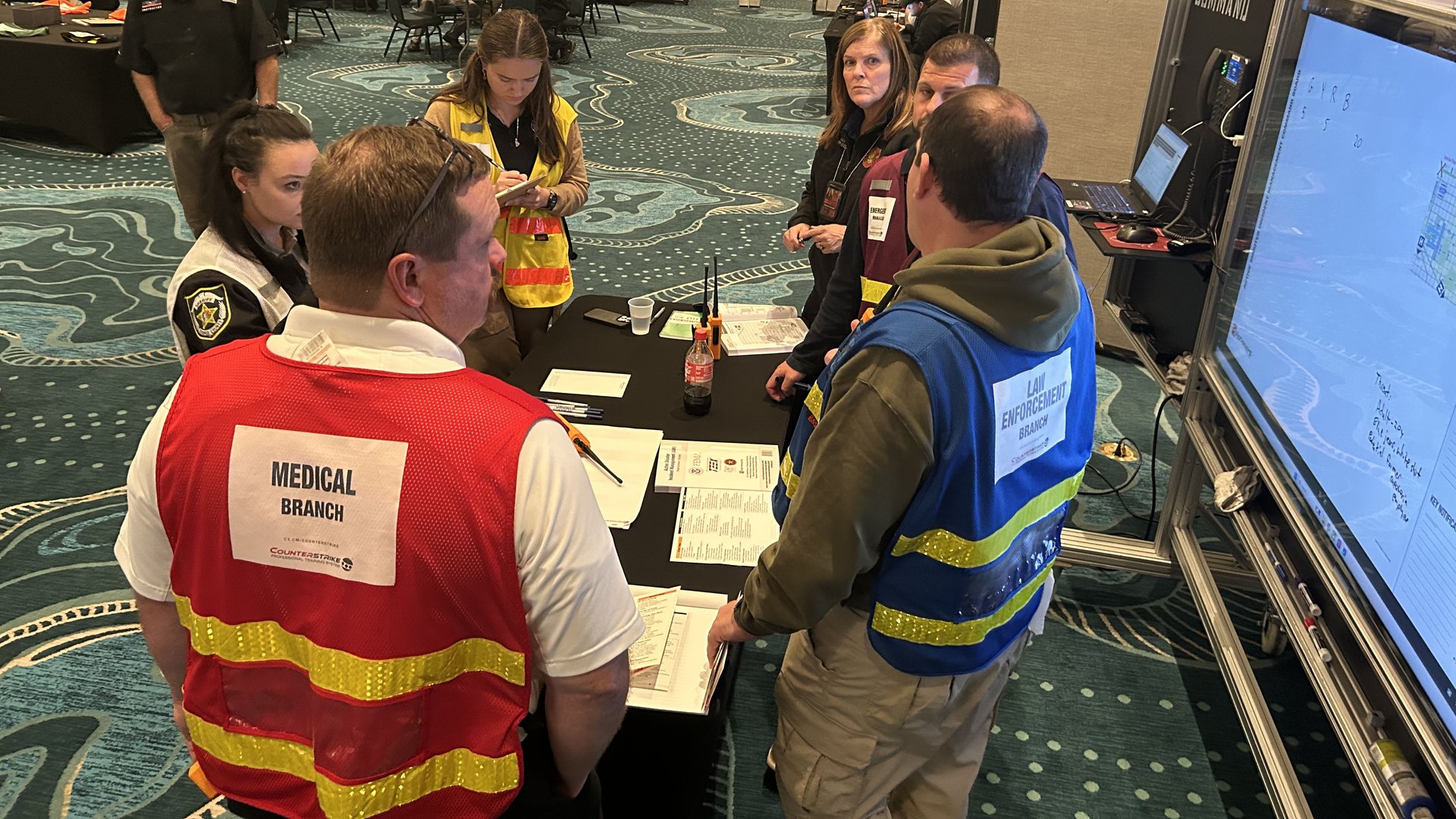
In the ASIM response model, the first arriving law enforcement supervisor initially assumes Command from the Tactical Group Supervisor. This first arriving law enforcement supervisor remains in Command until arrival of the second law enforcement supervisor. Once a face-to-face briefing is completed, the second supervisor assumes Command and assigns the first supervisor as the Law Enforcement Branch Director, who directs law enforcement operations alongside (face-to-face) the Medical Branch Director in the Command Post.

NCIER®
Glossary
October 15, 2026 • 1 min read
Law Enforcement Branch Director
Definition
In an active shooter incident, the role who directs law enforcement operations under the Incident Commander (or Operations Section Chief if established). The Law Enforcement Branch Director supervises the Tactical Group Supervisor and the Perimeter Group Supervisor, but not intelligence or investigative activities (those fall under the Intelligence/Investigations Section).
Official Definition
Source: Active Shooter Incident Management: Instructor Guide, C3 Pathways, Inc., 2026.
Discussion
Author
Lead Instructor
Reviewed By
Lead Instructor
Last updated:
Frequently Asked Questions
In the ASIM response model, the first arriving law enforcement supervisor is assigned to the Law Enforcement Branch position by the second arriving law enforcement supervisor after they assume Command.
All law enforcement operations except intelligence and investigations. The Law Enforcement Branch Director keeps the Incident Commander informed and directs the law enforcement response while working alongside (face-to-face) the Medical Branch Director.
The Tactical Group Supervisor and the Perimeter Group Supervisor report to the Law Enforcement Branch Director and may create additional Groups if needed.
When the second-arriving law enforcement supervisor is briefed by the first arriving law enforcement supervisor, the second supervisor assumes Command and reassigns the first supervisor as the Law Enforcement Branch Director.
The two Branch Directors lead parallel branches. One owns law enforcement operations. The other owns medical operations.
Top
Find the Perfect Training Class For You