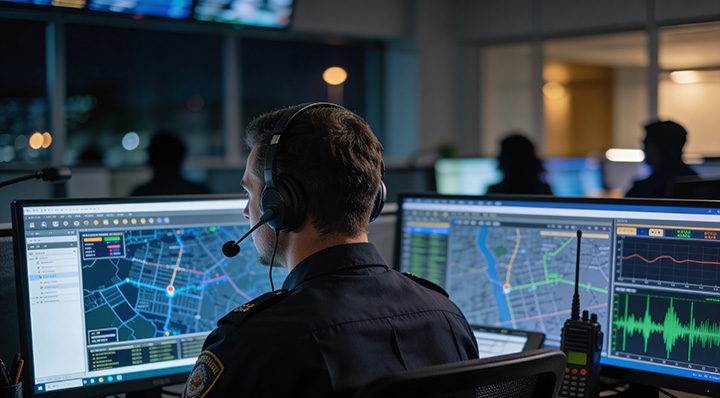
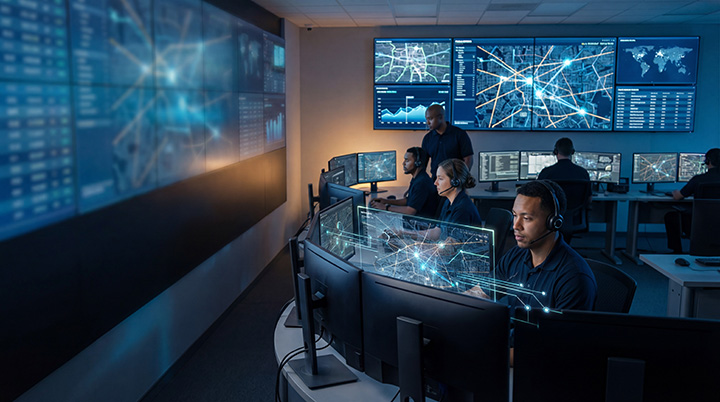
When a hostile event unfolds, most of the attention goes to what happens in the hallway, the parking lot, or the command post. But the operation actually starts somewhere else: in your dispatch / 911 center.
From the first ringing phone to the last radio transmission, your comm center is the initial intelligence hub and the communication backbone of the entire incident. If they are left out of planning and training, you are fighting with one hand tied behind your back.
It Starts With One Transmission: LCAN
The quality of the first minutes comes down to the conversation between the first arriving officer and dispatch.
LCAN report: Location, Conditions, Actions, Needs. That first LCAN gives dispatch, and everyone listening, a clear picture from the scene. When LCAN is missed or not captured, command starts blind.
At the same time, civilians hiding inside the building can become a massive intelligence source through text-to-911 where available:
- Exact location inside the building
- Number of uninjured survivors
- A simple triage snapshot (e.g., "3 walking, 2 not moving")
When dispatch captures and relays that information, field units are no longer guessing; they are moving with purpose.
Turning Chaos Into a Coherent Picture
In complex or mobile attacks, calls pour in from different locations. That chaos is stressful, but it is also an opportunity.
Dispatch supervisors, with a jurisdiction-wide view of incoming calls, are often the first to recognize: "This isn't three unrelated events. We have one moving threat or a coordinated attack."
That recognition changes everything:
- Alerts other dispatch centers and regional hubs
- Pushes suspect and vehicle descriptions across agency lines
- Helps command prioritize resources before the next site is hit
But it only works if the comm center is trained and empowered to think in those terms.
The Communication Backbone of Command
Dispatch is the glue that lets incident command stand up and function:
- Directing the first arriving fire/EMS supervisor to the law enforcement Command Post
- Tracking and broadcasting the Staging Area so everyone is going to the same place
- Coordinating with the Transport Group for real-time hospital capacity
NCIER instructors recommend agencies build standard response packages: pre-defined bundles of law enforcement, fire, EMS, and supervisors that launch automatically when a call hits certain thresholds (for example, "multiple people shot"). That prevents the dangerously small initial response that shows up over and over in after-action reports.
At the system level, comm centers also own many of the radio problems that derail incidents:
- Shared or disaster channels that some agencies don't even have programmed
- Different names for the same channel on different radios
- Encryption keys that were never distributed or tested
- Lack of training time on mutual-aid talkgroups
These are fixable, but only if dispatch is at the planning and exercise table.
Integrating Dispatch Into Negotiations and Intelligence
In many events, the suspect ends up calling 911. That makes the dispatcher the first negotiator.
A simple but powerful practice is to send a trained negotiator to sit beside the call-taker, coaching in real time while the dispatcher keeps their established rapport with the suspect. No abrupt handoff, no spike in agitation.
At the same time, embedding an investigator in the comm center during a critical incident turns that stream of 911 calls, texts, and tips into a live intelligence feed: suspect descriptions, movement patterns, secondary threats, all pushed directly to command instead of filtered through a slow relay chain.
Modern Technology Makes Dispatch Even More Central
Today, alarm systems can feed threat data directly into your CAD system, often before the first 911 voice call. Reverse-911 tools let dispatch push shelter-in-place or evacuation messages across a region while supporting the tactical response.
The people and the technology are already there. The question is whether we treat the comm center as a full member of the field team.
One Practical Next Step
If you take only one action from this article, make it this:
Test LCAN workflows. Practice text-to-911. Validate radio channels and naming. Rehearse how you would embed an investigator and a negotiator in the comm center.
To go deeper, download the full NCIER white paper, "The Dispatch Center as the Initial Intelligence Hub", from the Research & Insights Hub and share it with your chiefs, comm center leaders, and exercise planners.