For chiefs, 911 directors, and public safety leaders, there’s a critical piece of active shooter and hostile event readiness that often gets overlooked:
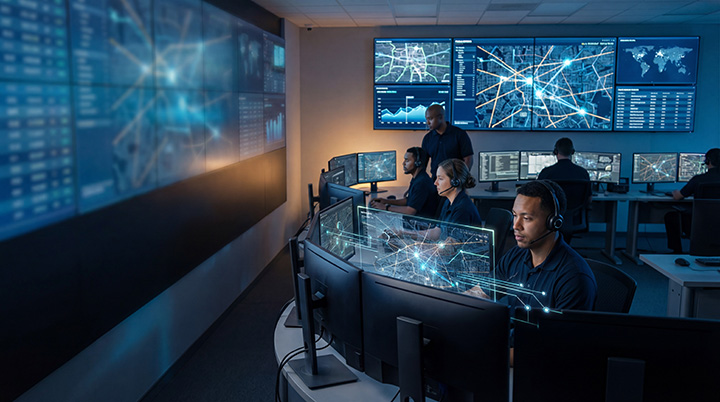
Your dispatch and 911 center.
In this 10-minute briefing, Bill Godfrey walks through key findings from NCIER’s white paper, “The Critical Role of Dispatch and 911 in Hostile Event Management,” and makes the case that dispatch is not just a support function — it’s the initial intelligence hub and communication backbone for the entire operation.
In this video, you’ll see how to:
• Use LCAN reports (Location, Conditions, Actions, Needs) to give dispatch and field units a clear first picture from the scene.
• Turn text-to-911 and on‑scene callers into a structured intelligence feed for responders.
• Recognize how dispatch supervisors can be the first to spot a mobile or coordinated multi‑site attack.
• Build standard response packages so high‑threat calls don’t get an anemic initial response.
• Integrate dispatch into command, negotiations, and intelligence by embedding negotiators and investigators in the comm center.
• Fix predictable radio / channel / interoperability problems before a real incident exposes them.
If you take one action from this video, make it this:
Include your dispatch center in your next joint training and exercise plan — and test the radio channels, text‑to‑911 workflows, and intelligence flow end to end.
👉 Get the full white paper “The Critical Role of Dispatch and 911 in Hostile Event Management”:
https://ncier.org/research/white-paper-critical-role-of-dispatch-and-911-hostile-event-management
Looking to build a defensible, agency‑wide readiness system using the ASIM Checklist?
Learn more about the ASIM Agency Readiness Program and schedule an ASIM Readiness Strategy Session with an NCIER instructor.
Transcript
Welcome. Today we're going to talk about a topic that doesn't get nearly enough attention in active shooter and hostile event training. And that's the role of your dispatch center and 911 communication center.
This white paper from the National Center for Integrated Emergency Response draws on after action reports and instructor experience to argue that dispatch is not just a support function. It is the initial intelligence hub, the communication backbone, and frequently the first entity to recognize the true scope of a complex attack. So let's get into it.
Here's the core problem. In most after-action reports and training programs, the tactical response gets all the attention. Contact teams, rescue task forces, triage, transport, tactical. But NCIER instructors point out that the dispatch center's ability to manage information, coordinate resources and maintain communication integrity forms the foundational backbone of the entire operation. When dispatch fails, everything downstream fails. And yet, dispatch centers are often left out of joint training exercises.
The first moments of a response are defined by the quality of communication between the first arriving officer and dispatch. That first arriving officer's primary communication duty is to deliver an LCAN report — Location, Conditions, Actions, Needs. This gives dispatch and everyone listening the first clear picture from the scene. If the officer fails to give this or dispatch fails to capture it, the entire command structure starts blind. This is where it all begins.
Civilians trapped inside the building are an enormous intelligence source. And text to 911 is now available in many areas. A person hiding in a classroom can text their precise location within the building, the number of uninjured survivors that are with them, and even a basic triage count of the injured. For example, three wounded who can walk, two who can't. That information goes from the 911 center directly to responding units.
NCIER instructors strongly advocate for communities to publicize text-to-911 capability and for dispatch centers to be ready to manage text-based information flow during a crisis. We also need to tell the public what information we actually need in those text messages.
In a fast-moving or multi-site attack, the Dispatch Center becomes the strategic focal point. Here's the key insight from NCIER instructors. A mobile attacker or a coordinated attack creates chaos in the Dispatch Center with calls pouring in from multiple locations. But the chaos is also an opportunity. The Dispatch Center is the most likely first entity to piece together that these events are connected. A dispatch supervisor who has a broader view of all incoming calls across the jurisdiction can hear multiple reports and recognize the pattern — that this isn't three separate incidents, it's one coordinated attack. That recognition changes the entire response, and dispatch is the one that can see it.
Dispatch provides the essential communication linkage that allows incident command to be established and to function. From the outset, dispatch facilitates the command structure. The first arriving fire EMS supervisor calls dispatch to find out where the law enforcement command post is even located. Dispatch gets notified of the staging area location and then updates that location as the destination for everyone still responding. The transport group supervisor may call dispatch for hospital capacity counts. How many reds, yellows, and greens can they take?
And critically, NCIER instructors recommend that agencies establish a standard response package, meaning a predefined minimum of law enforcement, fire, and EMS units that gets dispatched automatically when a call reaches a certain threshold, like reports of multiple people shot. This standard response package can help avoid the dangerously inadequate initial response that plagues so many incidents.
Communication failures are the single most recurring theme in after action reports. One NCIER instructor joked that they appear a couple thousand times. Yes, it's that bad. And these aren't exotic failures. They're systemic, predictable problems rooted in dispatch-level operations. For example, disaster or mutual aid channels that aren't programmed into every agency's radios, channel names that are different on different agencies' equipment, encryption keys that were never distributed, and the big one — failure to practice or train on these shared channels before an actual event.
During a large-scale event, the 911 system itself can become overloaded and calls go unanswered. Or they automatically dump to a neighboring jurisdiction's 911 center that may have no idea what's going on in your incident. These are fixable problems, but only if dispatch is included in joint planning and training.
When an active shooter event transitions into a barricaded hostage situation, something interesting happens — the dispatcher may get a phone call from the suspect. It happens more often than you might think. That makes the dispatcher a negotiator. They are the first person speaking with the suspect, and they may build critical rapport. NCIER instructors recommend sending a trained negotiator to the communication center to act as a secondary, sitting right beside the dispatcher, providing guidance, feeding intelligence, all while the dispatcher continues the conversation. As we all know, an abrupt handoff to a new voice can agitate the suspect. This is a sophisticated integration of dispatch into a specialized tactical function that most agencies haven't planned for, along with even providing basic negotiator training to dispatchers.
The flow of information into the dispatch center makes it a critical asset for the intelligence section. NCIER instructors strongly advocate for embedding an investigator directly within the dispatch center during a critical incident. This allows immediate analysis of incoming 911 calls, text messages, and tips as they arrive, not minutes or hours later through a relay chain. The investigator sitting in the dispatch center can develop a clearer picture of the event in real time, identifying suspect descriptions, movement patterns, and potential additional threats, and then feed that intelligence directly to the field commander.
Modern communication and alarm technologies can integrate directly with the dispatch systems. Alarm systems can now send information straight to a dispatch center's computer-aided dispatch system, the CAD system, providing precise, geo-located data on the threat. That means dispatch knows where the incident is — what floor, what wing, what campus — before the first 911 call even comes in. Add reverse 911 mass notification tools and dispatch can simultaneously push public alerts and shelter-in-place instructions across an entire region while managing the tactical response. These aren't future technologies. They exist now, and they need to be integrated into training and standard operating procedures.
Let me leave you with this. While field units execute the tactical response, the dispatch center's ability to manage information, coordinate resources, and maintain communication integrity forms the foundational backbone of the entire operation. If you take only one thing from this session, take this. Include your dispatch center in your next joint training exercise. Test your radio channels. Practice text to 911 workflows. Plan for embedding an investigator and a negotiator in the comm center. The technology and the people are already there. They just need to be integrated.
This white paper and more resources are available at NCIER.org — that's NCIER.org, the National Center for Integrated Emergency Response. Thank you and stay safe.