
Lockdowns Work. Here's Why They Still Aren't Enough for School Readiness.
Most K-12 schools today can say, "We do lockdown drills." Many have adopted the Standard Response Protocol (SRP) and invested in better door hardware. That's progress.
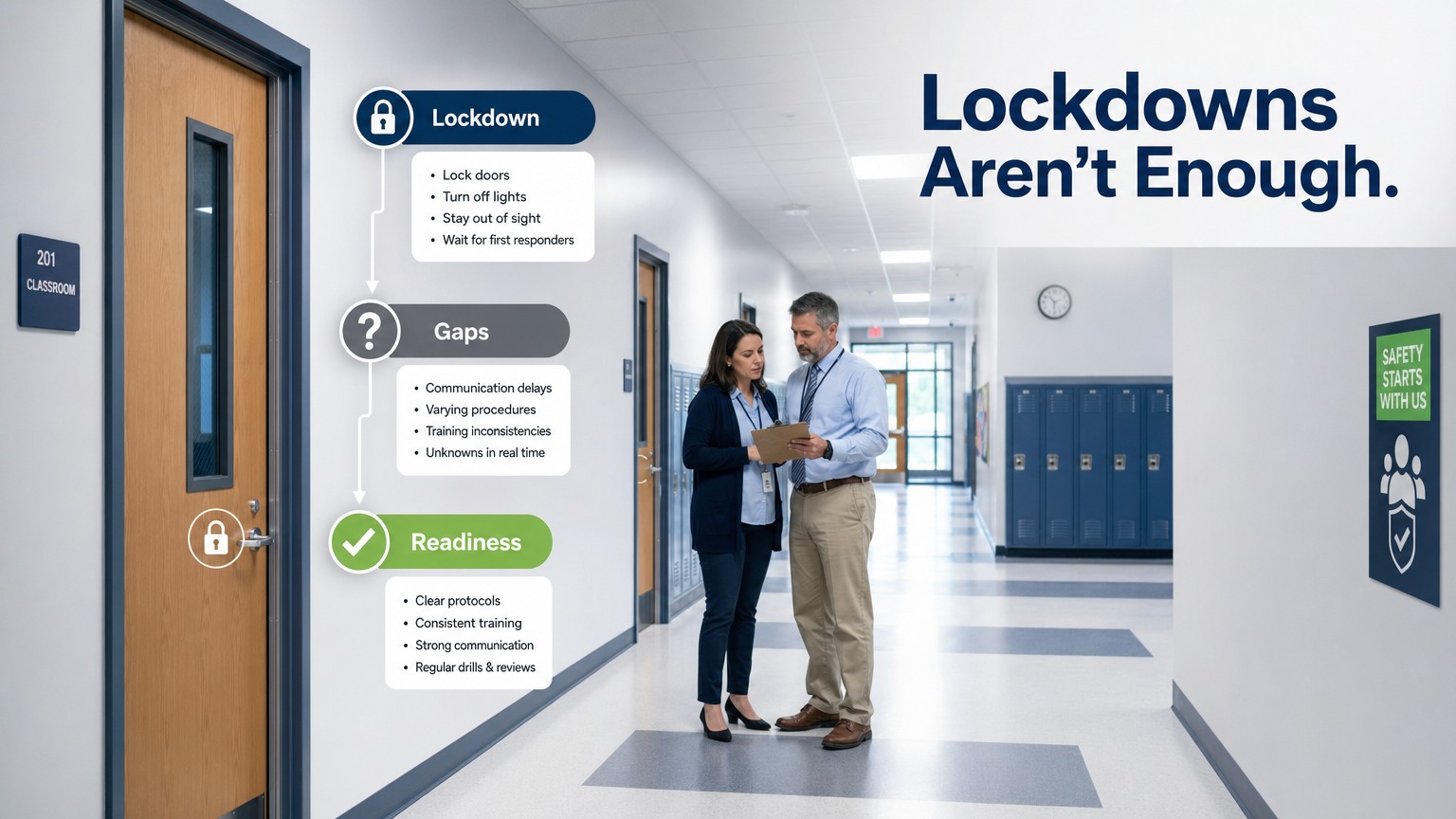
But lockdowns alone do not equal readiness.
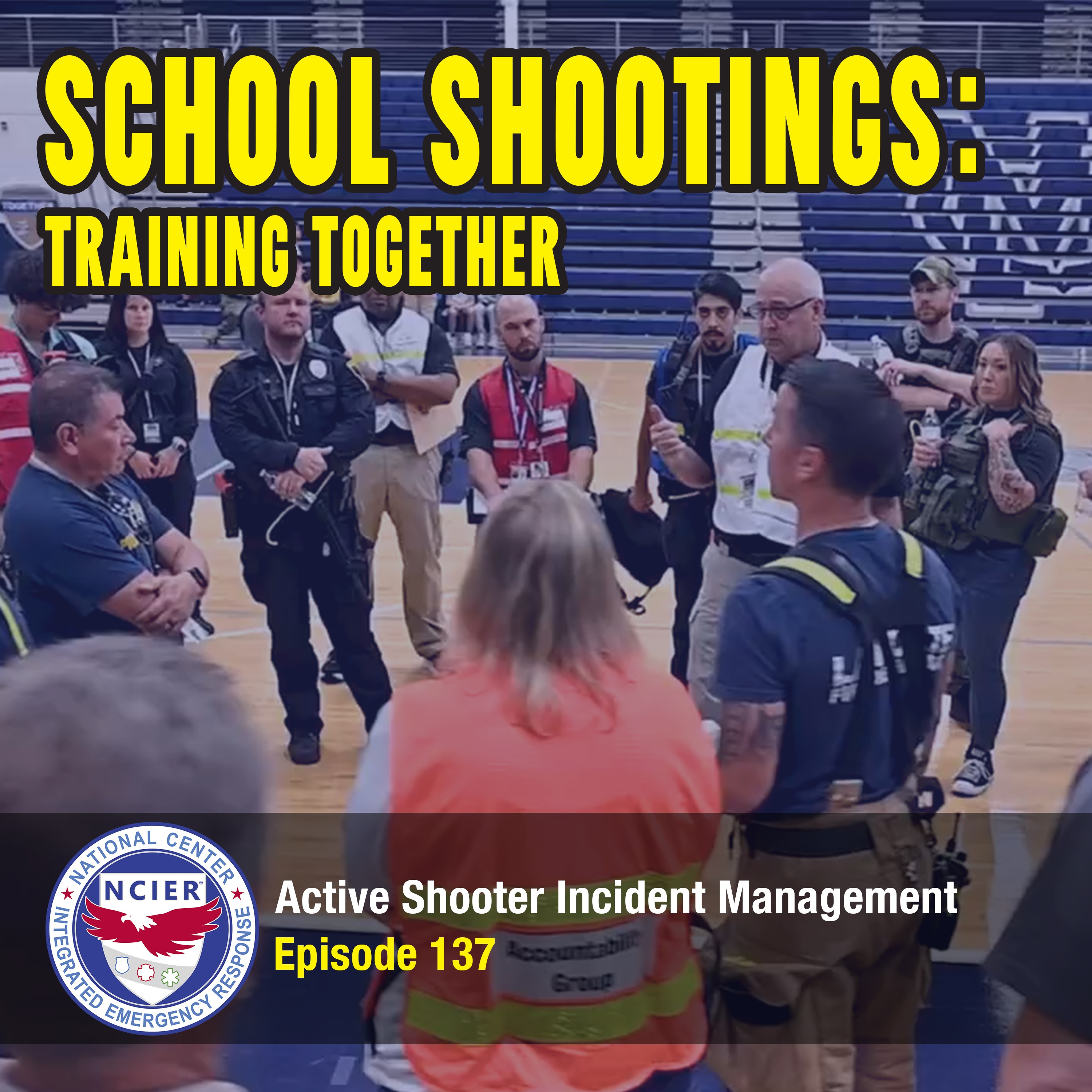
When a violent event occurs, law enforcement, fire, and EMS will mount a massive, fast-moving response. Multiple agencies converge, often with different radio systems, policies, and procedures. If your school's plan is built in isolation from that reality, you end up with predictable failure points: confusion about who can call lockdown, gaps for students outside classrooms, and misalignment with how responders actually operate.
Locked doors save lives – but they're not the whole plan
After-action reports and case studies consistently show that locked classroom doors are one of the most effective life-saving measures schools have. In multiple incidents, attackers failed to breach locked doors and moved on.
That evidence should give every school a clear priority:
- Make it simple to lock every instructional space from the inside
- Train staff to do it quickly under stress
But once those doors are locked, a harder question emerges: what about everyone who isn't in a classroom?
The students your lockdown plan forgets
Most written procedures assume a perfect moment: every student seated, every teacher in their room, zero movement.
Real days look different:
- Students in hallways between classes
- Restrooms in use
- Cafeteria at lunch
- Gym, auditorium, or specials in session
- PE or athletics outdoors
- Pools or specialty spaces
If your plan doesn't clearly answer "Where do those students go?" and "Who is responsible for securing them?" then your campus isn't truly ready. Each area needs a deliberate plan and pre-identified safe locations.
Human factors: Can you actually lock under stress?
There are two practical tests for classroom doors:
- Can they be locked from inside the room, without entering the hallway?
- Can they be locked with gross motor movements, not tiny buttons or knobs?
Under high stress, fine motor skills degrade. If teachers have to fumble with small thumbturns or hidden switches, some portion of rooms will fail to lock quickly enough. An honest door audit, followed by phased upgrades, is one of the highest-leverage improvements a school can make.
Who is allowed to initiate lockdown?
A surprising number of schools restrict lockdown activation to administrators or designated supervisors. The intention is good; the effect can be deadly.
If a teacher sees or hears an immediate threat but has to track down someone else with "permission" and access to the PA or alert system, you're burning seconds you don't have.
A more resilient standard:
- Any staff member who reasonably believes there is a threat can initiate lockdown.
- False activations are handled through training and debriefs, not punishment.
The cost of an unnecessary lockdown is minor. The cost of delayed activation in a real event is catastrophic.
How will you activate lockdown when tech fails?
Common activation methods all have failure modes:
- PA system: What if the one person who knows how to use it is off campus?
- Panic buttons / pull stations: Are they widely accessible, or locked in one office?
- Radios: Do all key staff have one—and know which channel to use?
- Apps: Do you have reliable Wi-Fi and/or cellular coverage across the entire campus?
A ready campus has at least two clearly defined ways to initiate lockdown and has trained staff on both.
Phones in classrooms: pretend or plan?
Telling students "turn off your phones" may sound good in a policy manual. In reality:
- Many students will not comply.
- Parents expect some kind of communication.
A more realistic approach:
- Phones silent (including vibration).
- Screens dimmed and put away.
- One designated person per room texts 911 (where available) with:
- Room/location
- Number of people
- Presence/absence of injuries
- Whether the attacker is in or near that room
That one message gives responders better situational awareness while keeping the room quiet and controlled.
The move beyond "we do lockdowns"
Lockdowns are necessary. They're just not sufficient.
Real readiness means:
- Planning for students and staff who aren't in classrooms
- Ensuring every door can be locked quickly from inside
- Allowing any staff member to initiate lockdown
- Training on multiple activation methods, not just one
- Having a realistic plan for phones and information flow
Most importantly, it means aligning your internal procedures with how police, fire, and EMS will actually respond.
If you've already invested in SRP and drilled lockdowns, the next step isn't "more of the same drills." It's sitting down with your public safety partners, walking your campus together, and closing the gaps that a lockdown alone can't fix.