Which part(s) of the course was MOST valuable to you. Please explain why.
The PIO Training.
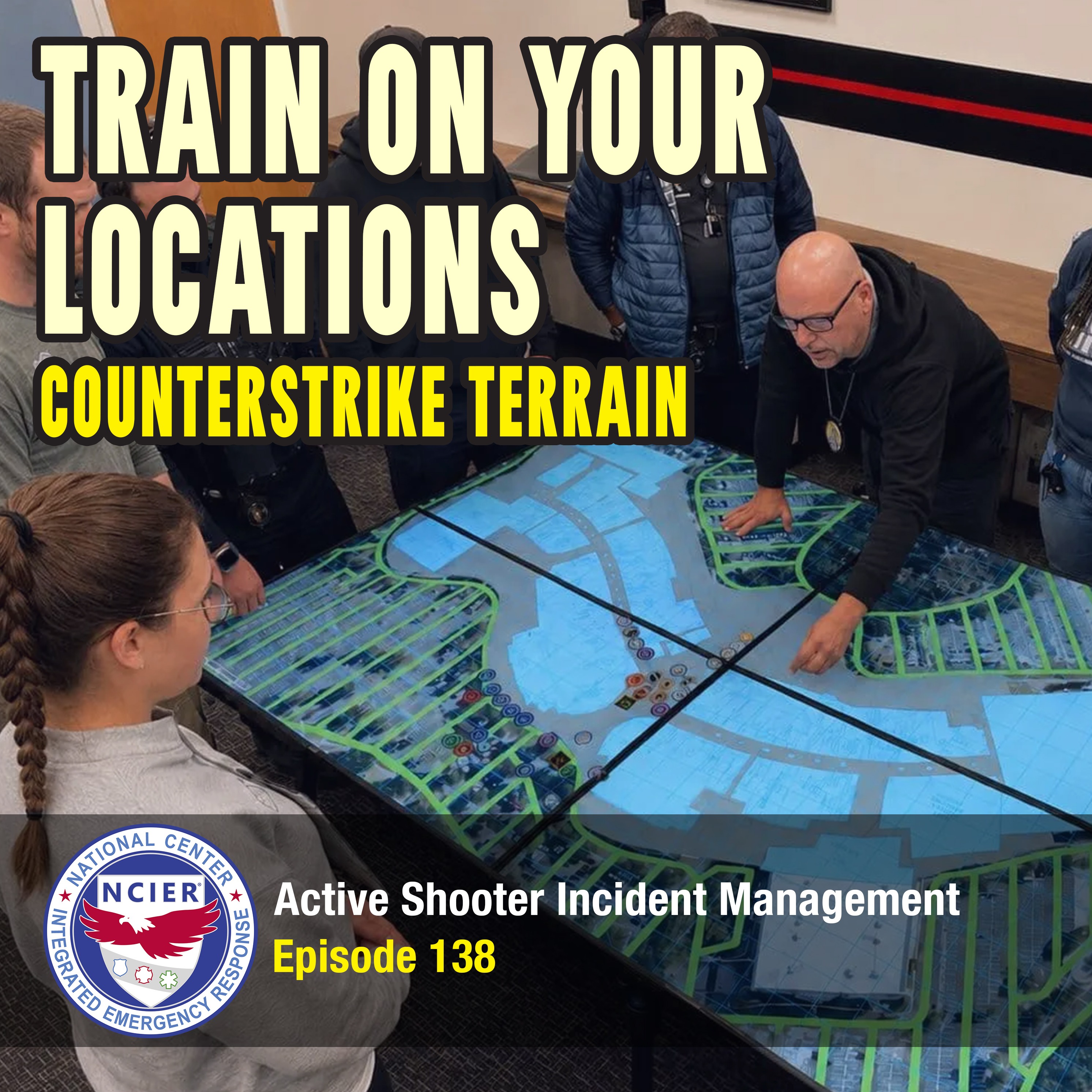
Tabletop exercises and written plans are essential starting points, but they can’t show how your system performs when the clock is ticking. ASIM Advanced is a 3‑day, 24‑hour, high‑fidelity simulation course for up to 60 responders that runs 10 complete active shooter and complex coordinated attack incidents from first call to last transport. Your full team sees how the ASIM Checklist performs under pressure across law, fire, EMS, dispatch, PIO, emergency management, and air assets.
Most agencies have plans, policies, and tabletop exercises, but very few have seen their full team manage multiple complex attacks at operational tempo. ASIM Advanced brings law enforcement, fire, EMS, dispatch, PIO, emergency management into the same room and the same simulated incidents. You get real repetitions, real decisions, and real data on how your system performs when seconds matter.
Move beyond discussion‑based exercises into 3D simulation where radio traffic, injects, and timelines force real‑time command and control decisions.
Run 10 complete incidents using the ASIM Checklist so every function practices the same priorities, language, and expectations across agencies.
Run your full team through realistic, high-pressure incidents so leaders leave with a clearer understanding of how the system performs, where coordination breaks down, and what needs follow-up.
ASIM Advanced is a 24‑hour, 3‑day in‑person course for up to 60 participants across law enforcement, fire/EMS, dispatch, PIO, and emergency management. Using the NIMSPro™ 3D Simulation System, your team runs 10 complete incidents that build from basic active shooter events to complex coordinated attacks with IEDs and barricaded or hostage‑taking attackers. Participants rotate through ASIM Checklist positions, gaining role‑specific experience and system‑wide understanding.
Orientation to the ASIM Checklist, incident profiles, and simulation environment, followed by initial incidents that establish common roles, communications, and priorities.
Run multiple moderate‑complexity incidents that stress‑test unified command, resource deployment, medical operations, communications, and multi‑agency coordination.
Tackle complex coordinated attacks and special‑problem incidents, then complete structured after‑action reviews to capture gaps, strengths, and next steps for your region.
ASIM Advanced puts your people inside realistic, high‑tempo incidents without the risks and costs of full‑scale field exercises. Participants leave with muscle memory for their roles, a shared mental model across disciplines, and a clear picture of how the system performs when everything is on the line.
Responders work in a NIMSPro™ simulation lab that mirrors real‑world radio traffic, timelines, and injects from first 911 call to last patient transport.
Law enforcement, fire, EMS, dispatch, PIO, and emergency management representatives work side by side, building trust and shared expectations across agencies.
Participants rotate through incident commander, operations, medical, staging, perimeter, and other key positions so they understand how each role affects the whole incident.
Each incident ends with a guided after‑action review led by NCIER instructors, connecting decisions and timelines back to the ASIM Checklist and your local policies.
You leave ASIM Advanced with a stronger shared picture of how your system performs under pressure, where the friction points are, and what readiness work needs attention next.
Bring your full team into the same incident before a real one forces the issue.
Hosts provide the venue and up to 60 participants across law enforcement, fire/EMS, dispatch, PIO, and emergency management. NCIER brings the mobile NIMSPro™ simulation lab, instructor team, AV, incident scenarios, and all course materials.
Here’s what happens over the next 1 business day.
Keep an eye out for a call from (407) 490-1300. If you don’t hear from us within 1 business day, call us at (407) 490-1300.
Prefer to talk now? Call (407) 490-1300.
ASIM Advanced is the simulation step that turns ASIM from a classroom concept into proven performance across your full team.
15–20 minutes, no obligation. We’ll help you figure out if hosting ASIM Advanced makes sense for your agency or region.
Schedule a Brief CallWhich part(s) of the course was MOST valuable to you. Please explain why.
The PIO Training.
Which part(s) of the course was LEAST valuable to you? Please explain why.
None I think everything was important.
Please provide any other comments or suggestions you have for improving this course.
It would be really cool if the PIO portion could be developed with the use of AI to simulate social media and other PIO responsibilities.
What other training is most important to you now that you have completed this course?
Anything PIO related.
Which part(s) of the course was MOST valuable to you. Please explain why.
The activities and instructors' stories/experiences were the most valuable pieces of this course. Their experience is so vast and varied that the entire public safety community is represented through the instructors, and they can all provide input from their own experiences.
Which part(s) of the course was LEAST valuable to you? Please explain why.
I think the players in the exercise should have been left to make their own mistakes more often. I understand and appreciate the prompts given by instructors at the boards, but I think there were too many times in which the responders looked like deer in the headlights, and instructors' prompts were the only thing getting them along. Let the incident suffer and have it come out in the hotwash.
Please provide any other comments or suggestions you have for improving this course.
This is one course that I feel needed an ICS review. I can't believe I'm actually saying that because I wish it was removed from almost every class. However, I think it was clear that some first responders in this course were in need of a review which would have made the first few activities run smoother.
What other training is most important to you now that you have completed this course?
I would like to get into all-hazard incident specific training courses and dive deeper into the positions explored in this training.
Which part(s) of the course was MOST valuable to you. Please explain why.
Establishing a baseline for command structure and practicing.
Which part(s) of the course was LEAST valuable to you? Please explain why.
N/A.
Please provide any other comments or suggestions you have for improving this course.
None.
What other training is most important to you now that you have completed this course?
Applying to local operational abilities.
Which part(s) of the course was MOST valuable to you. Please explain why.
Command and decision making practice.
Which part(s) of the course was LEAST valuable to you? Please explain why.
N/A.
Please provide any other comments or suggestions you have for improving this course.
More instruction prior to computer portion.
What other training is most important to you now that you have completed this course?
Continuing to coordinate with local law enforcement and begin preplanning at locations.
Which part(s) of the course was MOST valuable to you. Please explain why.
Communication and coordination.
Which part(s) of the course was LEAST valuable to you? Please explain why.
N/A.
Please provide any other comments or suggestions you have for improving this course.
N/A.
What other training is most important to you now that you have completed this course?
Mass casualty evcuation.
Which part(s) of the course was MOST valuable to you. Please explain why.
Different roles in every scenario, forces people to look from different perspective.
Which part(s) of the course was LEAST valuable to you? Please explain why.
I wouldn't say there was a least important part of the course.
Please provide any other comments or suggestions you have for improving this course.
Very good course.
What other training is most important to you now that you have completed this course?
Gathering county resources and explaining their roles and capabilities.
Which part(s) of the course was MOST valuable to you. Please explain why.
Medical Command.
Which part(s) of the course was LEAST valuable to you? Please explain why.
Communication Officer.
Please provide any other comments or suggestions you have for improving this course.
Co-ordinated RTF Deployment.
What other training is most important to you now that you have completed this course?
NIMS 300-400.
Which part(s) of the course was MOST valuable to you. Please explain why.
The simulations. Hands on reinforcement.
Which part(s) of the course was LEAST valuable to you? Please explain why.
N/a.
Please provide any other comments or suggestions you have for improving this course.
N/a.
What other training is most important to you now that you have completed this course?
Rapid triage.
Which part(s) of the course was MOST valuable to you. Please explain why.
Tying real world incidents to the discussion points.
Which part(s) of the course was LEAST valuable to you? Please explain why.
None.
Please provide any other comments or suggestions you have for improving this course.
More expanded maps on the boards to see perimeter areas and what's around.
What other training is most important to you now that you have completed this course?
All applicable training.
Which part(s) of the course was MOST valuable to you. Please explain why.
Practical exercises.
Which part(s) of the course was LEAST valuable to you? Please explain why.
All content was valuable.
Please provide any other comments or suggestions you have for improving this course.
Well run and good traninig.
What other training is most important to you now that you have completed this course?
Additional incident command courses.
*Evaluations are collected from verified course participants and published without editing. Ratings and comments reflect each participant’s individual experience.